Homeowners insurance may pay to remove a tree when a covered event, such as a storm, brings it down onto the house or another insured structure, but it usually does not pay to take down a dead or unwanted tree.
May be covered
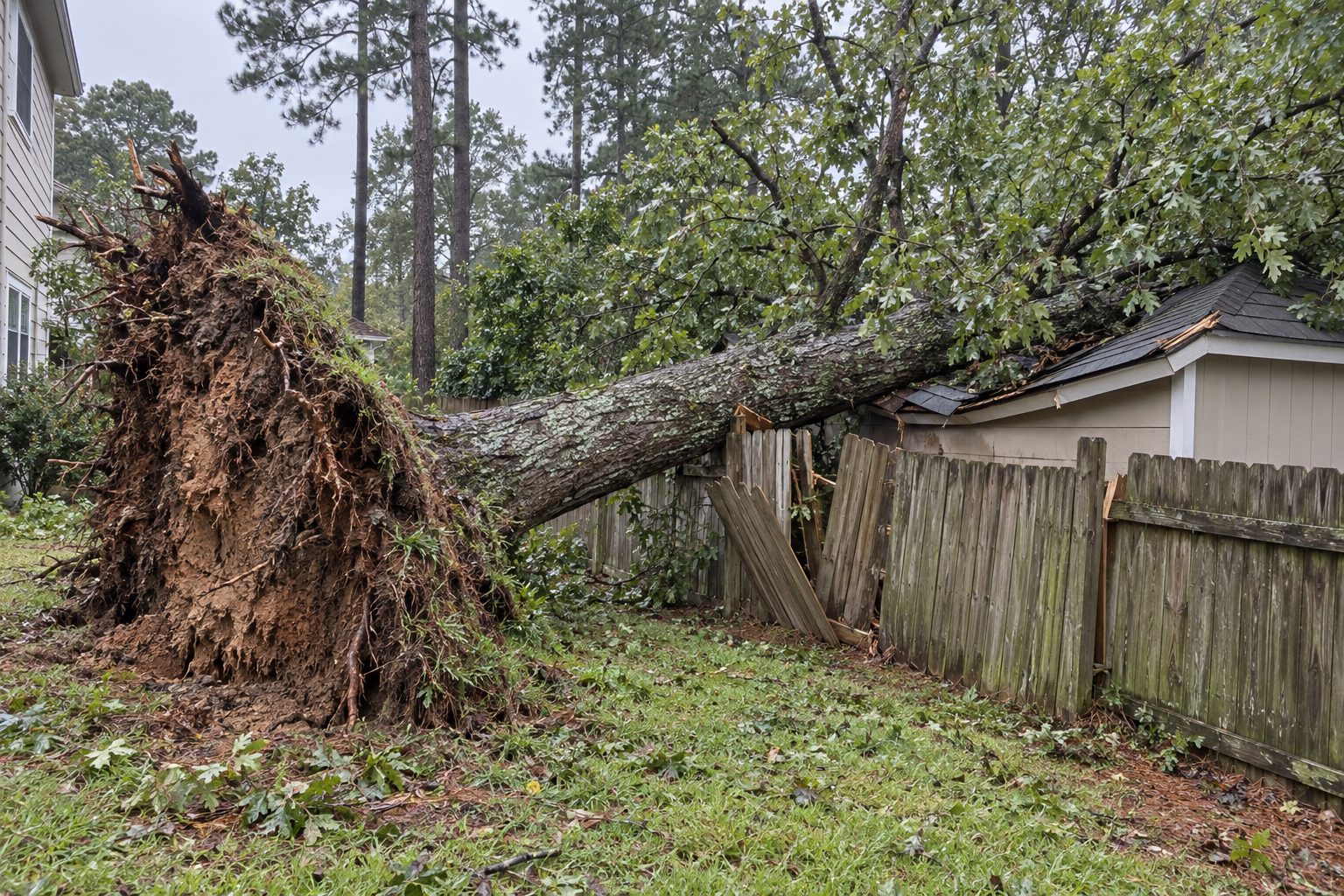
A storm puts a tree on the house
This is the case worth opening a claim on. Photograph the roof or garage where the tree lies, then ask your insurer what the policy pays toward getting it off.
Usually not covered
A dead or unwanted tree, still standing
Taking down a tree because it is dead, in the way or no longer wanted is routine removal, and policies usually leave that to the homeowner. It is a job to plan and price like any other removal.
Every policy is written differently, so your insurer has the last word on what a claim will cover. What we can tell you is what the tree hit and what it will take to get it off.
Down in the yard
Trees That Fall Without Hitting Anything
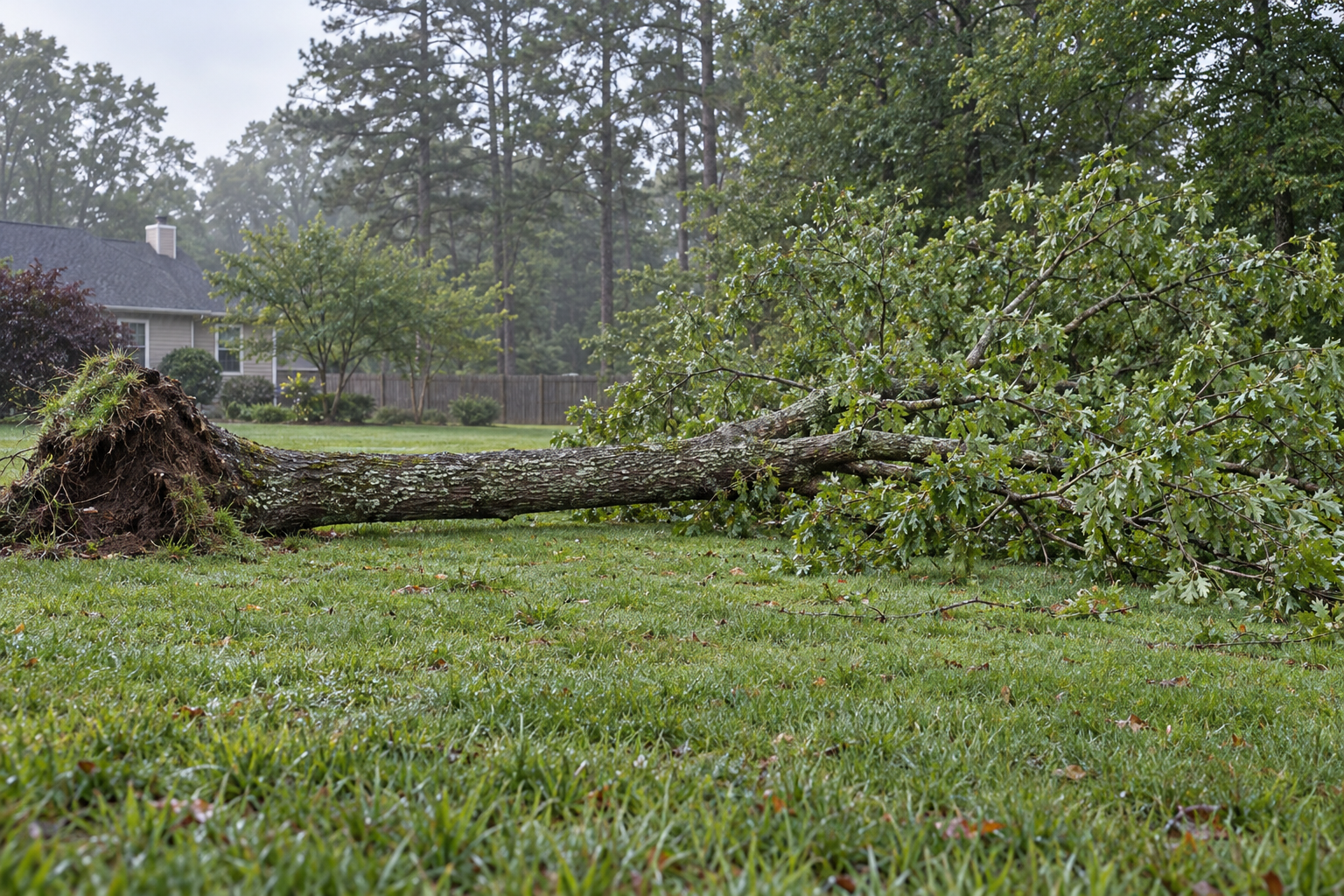
A tree that falls in the yard without hitting the house or another structure is less often covered by insurance.
With nothing damaged, clearing it tends to be treated like any other removal, and the bill usually stays with you. If it clipped a fence, a shed or a gutter on the way down, photograph that before anything moves and put the question to your insurer.
Before anything is cut
Documenting Damage for the Adjuster
You should photograph and video the damage from a safe distance before any work starts, because that record is what helps the adjuster see what the storm did.
Once a limb is cut or the trunk is moved, the scene the adjuster needs is gone. Stay well back from the tree, out from under anything still hanging, and away from any wire it is touching.
What to record before the crew starts work.
The whole scene
Wide photos of the tree and everything it landed on, from more than one side
Each point of damage
Closer photos of the roof, gutter, fence, shed or car where the tree hit
A slow video walk-around
The same scene on video, filmed from where it is safe to stand
The base of the tree
The roots or the broken trunk, showing how the tree came down
While the claim is open
Getting Emergency Help With a Fallen Tree
A tree resting on the house is taken off by an emergency crew once the site is safe to work, and the claim carries on alongside the removal.
You do not wait for the paperwork with a trunk on the roof. Crews clear fallen trees from homes, fences, outbuildings and power-line areas only when it is safe, and storm work is dangerous work, as TreesAreGood.org points out. Keep everyone clear until the crew has the tree under control.
Who pays can turn on whether the tree was healthy before it fell and on what each owner's policy says, so your insurer is the one to ask.
Photograph it the way you would your own tree, the base of the trunk included, before anyone starts cutting it up.
Neighbors on Google
What our customers say
Our Google reviews, in the words of the people who wrote them.
Competitive price and they did a great job. I would definitely use them again.
Tracy Turner
Google review
This group is fantastic 98 degrees outside they did not stop these are heros
Vickie Lewis
Google review
These guys came highly recommended from friends and family. Alejandro Came and gave me a competitive quote on the same day, for a giant white oak that others said was too big. Showed up on time on the day we agreed on and did an amazing job. You can’t even tell they were here aside from the massive tree that’s gone. 10/10 would recommend to anyone. Fantastic crew.
Dan Jones
Google review
Tree down, photos taken
Tell us what the tree hit, and we will come look at it
Call with where the tree came down and what is under it. We look it over and give you a free, no-obligation estimate.